


KARACHI/ISLAMABAD: The Ministry of National Food Security and Research (MoNFSR) has repatriated Muhammad Qasim Khan Kakar, a BS-19 officer on deputation to the Department of Plant Protection (DPP), to his parent department in Balochistan amid multiple allegations of misconduct and corruption, officials said.
According to an official notification issued earlier this month, Mr Kakar, who belongs to the Agriculture Research Institute (ARI), Government of Balochistan, has been withdrawn from the DPP with immediate effect and directed to report back to his parent organisation.
Officials said this is not the first time Mr Kakar has been repatriated. He was earlier withdrawn from the DPP during the tenure of former MoNFSR secretary Waseem Ajmal Chaudhry following his arrest by the FIA’s Corporate Crime Circle, Karachi, in a corruption and fabrication case registered in 2024. Officials claimed that despite the repatriation order, Mr Kakar neither reported to the Establishment Division nor to his parent department and remained absent from duty for several months.
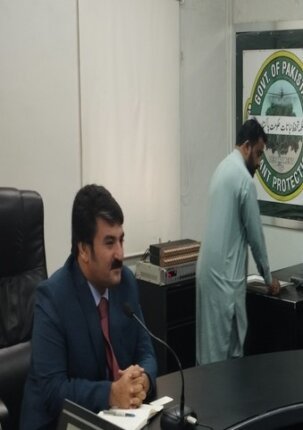
Sources within the ministry alleged that after a service gap of more than four months, Mr Kakar managed to have his repatriation order withdrawn and was subsequently appointed Deputy Secretary (Planning) in the MoNFSR. The sources alleged that the move was facilitated through political pressure, though no official confirmation of this claim was available.
The latest repatriation, officials said, followed allegations that Mr Kakar disclosed classified information relating to the MoNFSR and the DPP to Karachi-based clearing agents and fumigators. He is also accused of maintaining links with individuals involved in clearing and fumigation businesses connected with import and export consignments. Officials further alleged that fake and fabricated documents were submitted to the DPP for the registration of methyl bromide imported from a Chinese manufacturer, allegedly in connivance with certain DPP officials.
Officials also alleged that Mr Kakar extorted money from several fumigation companies, including Tahir Fumigation Services, Adeel Pesticides, Pentagon Fumigation Services and Pak Pansy, in the name of senior officials. According to officials familiar with the matter, these firms claim to possess records of communications and financial transactions allegedly linked to Mr Kakar’s visits abroad, including a visit to China.
Earlier, in a memorandum dated February 1, 2024, then Director General of the DPP Dr Allah Ditta Abid accused Mr Kakar, who was holding dual responsibilities at the time, of repeatedly failing to carry out assigned duties. These included delays in auctioning condemned vehicles, failure to repair vehicles required for locust surveillance operations, non-issuance of extension orders for contract employees, and non-compliance with transfer and disciplinary directives.
The memorandum also alleged that Mr Kakar neglected his responsibilities as Director Quarantine, including failure to conduct technical audits of export processing facilities and to prepare technical dossiers for exportable commodities. According to the communication, these lapses contributed to a decline in registrations of Pakistani establishments with international regulatory bodies, resulting in financial losses and weakened export competitiveness.
Officials further alleged that during late 2023 and early 2024, phytosanitary certificates for citrus consignments were issued from Karachi containing incorrect or misleading information. These certificates were reportedly issued by Muhammad Hanif, an entomologist working on contract with the DPP, allegedly under the instructions of Mr Kakar. According to officials, the certificates were issued in the name of an exporter based in Sargodha, prompting complaints from stakeholders.
Following the complaints, officials claimed that Mr Hanif absented himself from duty and official records related to the certificates were found missing. After the transfer of Dr Abid as DG DPP, Mr Hanif later reappeared and, according to officials, continued to receive salary during the period of absence. Ministry officials said that a proposal for termination of Mr Hanif’s contract had earlier been initiated but did not proceed.
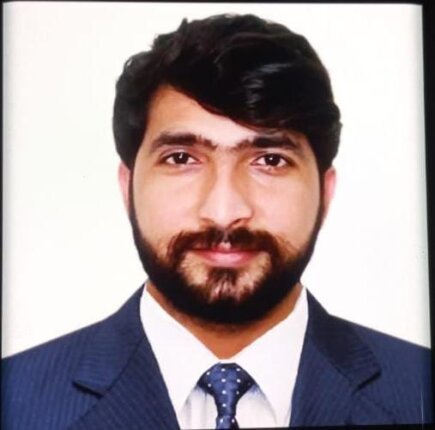
Separately, the Directorate General of Agriculture Research, Balochistan, issued a notice on February 12, 2024, highlighting alleged irregularities during Mr Kakar’s tenure as Director of Agriculture Research. These included the disappearance of official equipment — including a tractor and a laser leveler — from the institute’s inventory, an unrecorded auction of scrap materials, and the unauthorised transfer of official accommodation to a non-governmental organisation.
The notices directed Mr Kakar to submit explanations within specified timeframes and called for recovery of missing assets and clarification of financial proceeds, warning of disciplinary action in case of non-compliance.
In addition, questions were raised over the legality of Mr Kakar’s deputation to the DPP, with officials pointing to an alleged mismatch between his qualifications and the requirements of the post. A quo warranto petition challenging his deputation was filed before the Sindh High Court, during which the ministry informed the court that Mr Kakar had been repatriated to his parent department.
While the latest repatriation notification does not explicitly cite the allegations, officials familiar with the matter said the decision was taken in the context of ongoing inquiries, administrative restructuring within the DPP, and efforts to restore regulatory discipline in a department currently facing scrutiny over governance and enforcement issues.
Efforts to obtain comments from Mr Kakar and Mr Hanif were unsuccessful. Ministry officials also declined to comment on whether further disciplinary proceedings would follow.
The DPP has witnessed multiple senior-level changes in recent months, including suspensions and transfers, as the ministry seeks to address internal disputes and policy implementation challenges related to phytosanitary controls and international trade obligations.


