


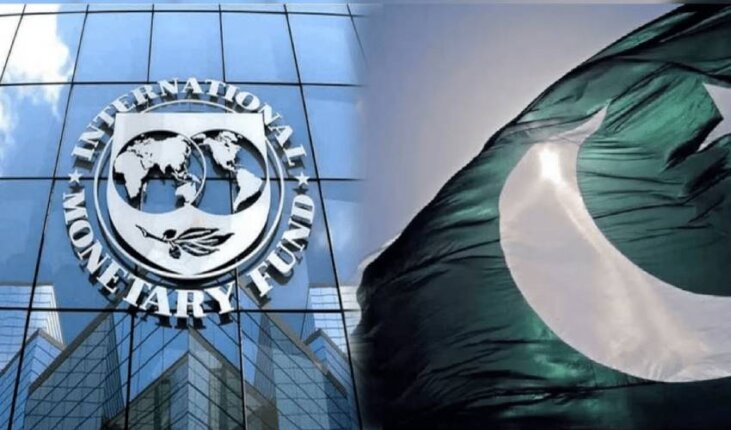
ISLAMABAD: A recent IMF governance diagnostic has raised serious concerns over Pakistan’s evolving investment governance structure, warning that overlapping mandates, unchecked exemptions, and broad legal immunities are undermining transparency, weakening accountability, and creating confusion across federal institutions.
The report highlights that the Board of Investment (Amendment) Act, 2023 particularly Articles 10E, 10F and 10G has significantly altered the decision-making landscape by granting sweeping powers to the Special Investment Facilitation Council (SIFC). These provisions, while ostensibly designed to fast-track strategic projects and reduce bureaucratic delays, appear to concentrate authority in an entity that enjoys extraordinary discretion and legal protections. Under Article 10F, the federal government may, on the recommendation of the SIFC, relax or exempt any regulatory requirement for investment-related projects, agreements or transactions. Meanwhile, Article 10G shields the SIFC, its members, and consultants from legal challenges, investigations, or liability for acts, omissions or procedural lapses committed in the course of their official functions. Anti-graft bodies and investigative agencies are barred from examining commercial decisions unless there is material evidence of mala fide intent, a threshold governance experts argue is exceptionally hard to meet.
Despite the introduction of these powers and the establishment of the SIFC as a central investment facilitation platform, the Board of Investment (BOI) continues to operate with its original mandate, resulting in two parallel bodies performing overlapping functions. The IMF notes that this coexistence of multiple institutions with similar mandates has blurred lines of responsibility and created ambiguity in public investment management and public-private partnership processes. Ministries and regulatory entities, according to officials familiar with the matter, often face conflicting instructions from more than one authority, complicating compliance and slowing down decision-making instead of streamlining it.
While supporters of the SIFC model argue that these reforms reduce red tape and improve efficiency, the IMF warns that efficiency without oversight carries long-term risks, especially when legal immunities weaken institutional checks and remove avenues for contesting flawed or irregular decisions. The report stresses that the current framework prioritizes rapid facilitation but lacks transparency mechanisms to ensure integrity in major investment and privatization transactions. By insulating decision-makers from scrutiny and protecting transactions from legal challenge even in cases of procedural irregularities, the system increases transactional risks and heightens concerns around governance.
The IMF concludes that Pakistan’s persistent approach of creating new institutions to address governance challenges has added layers of complexity rather than resolving structural weaknesses. Instead of strengthening the investment climate, the multiplication of authorities has generated confusion, diluted accountability, and contributed to inconsistent policy implementation. The report urges Pakistan to address the root causes that deter foreign investment such as regulatory unpredictability, weak institutional capacity, and insufficient accountability rather than relying on new entities with overlapping functions. It calls for a coherent institutional framework supported by robust governance and clear lines of authority, warning that sustainable investment facilitation cannot be achieved through parallel structures or unchecked powers.


