


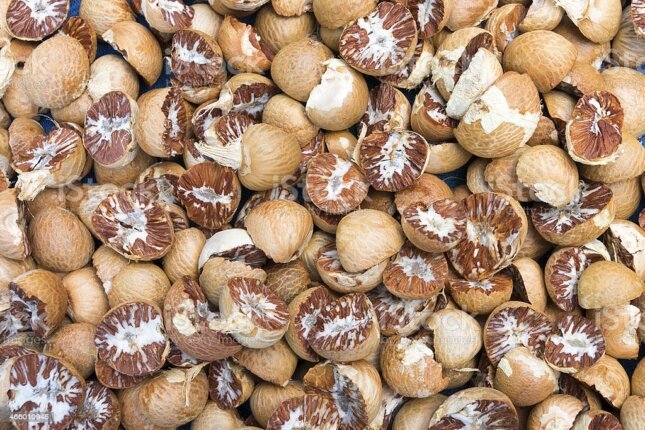
KARACHI/ISLAMABAD: Regulatory circumvention, institutional overreach, and political patronage have dismantled Pakistan’s plant biosecurity framework, allowing hundreds of thousands of tons of uninspected, hazardous betel nut (Areca catechu) to flood domestic markets. Classified as a high-risk commodity under ISPM 32, betel nut harbors 19 destructive quarantine pests from Indonesia absent in Pakistan, posing severe biosecurity and economic threats.
Under Rule 3 of the Pakistan Plant Quarantine Rules (PPQR), 1967, and Form-1, clearance strictly required an advance DPP Import Permit, an NPPO Indonesia Phytosanitary Certificate, and mandatory arrival disinfestation. Although specific requirements were initially omitted against PCT code 0802.8000 in the Import Policy Order (IPO), 2016, Rule 7’s non-obstante clause applied all prevailing biosecurity laws mutatis mutandis.
Consequently, PPQR (1967) quarantine mandates remained fully enforceable. Customs lacked statutory authority to unilaterally sample, test, or release non-compliant cargo upon collecting duties; such consignments were legally subject to onshore treatment, confiscation, destruction, or re-export.
Notwithstanding DPP mandates, Pakistan Customs subjected consignments to unauthorized in-house aflatoxin testing, allegedly extorting PKR 1.5 million per container from importers while opening pathways for invasive pests. Whenever DPP barred releases without biosecurity clearance, Customs demurred, willfully ignoring Rule 7 to claim quarantine rules did not apply unless transcribed verbatim in the IPO.
To halt Customs’ alleged extortion and dilatory tactics, DPP and MNFSR moved the Ministry of Commerce to promulgate S.R.O. 1067(I)/2017 on October 20, 2017, formally inserting mandatory phytosanitary requirements against betel nut under PCT code 0802.8000 in the IPO, 2016. Importers duly complied by securing advance DPP permits, Indonesian NPPO certificates, arrival treatments, and university aflatoxin testing.
Nevertheless, Pakistan Customs operated an ultra vires parallel regime, enforcing secondary sampling and re-testing at PCSIR Karachi. Importers alleged Customs colluded with smuggling cartels to generate fraudulent adverse reports from compromised chemists, sabotaging tax-paid shipments to sustain dependence on contraband.
Importers challenged this overreach before the Sindh High Court (C.P. No. D-2017 of 2018), alleging PCSIR was compromised. On November 20, 2018, the Court ordered DPP to designate alternative laboratories. Following H.E.J. and DESTO recusals, DPP notified Karachi University and NIBGE, later revising rules on March 28, 2019, to clear cargo on foreign reports while testing only every fifth consignment.
Despite binding rulings and statutory DPP authority, Pakistan Customs defied Plant Protection Release Orders, forcing unauthorized re-testing via PCSIR or H.E.J. to extort bribes, while retaliatory raids and police interceptions targeted compliant importers under anti-gutka pretexts.
When importers re-challenged this overreach, the Sindh High Court definitively resolved the dispute in CP No. D-3468/2021 & Others, strictly barring Customs from sampling, testing, or certifying betel nut cargo and affirming the DPP’s exclusive biosecurity jurisdiction.
After cartel-engineered complaints prompted NIBGE and Karachi University to recuse themselves, the DPP expanded its testing panel to H.E.J., DESTO, PCSIR, MNSUA, PSQCA, and AARI. At H.E.J., lab in-charge Dr. Shakeel Ahmed allegedly extorted PKR 1 million per container to manufacture clean surrogate samples swapped by bribed DPP inspectors. Under scrutiny from apex intelligence agencies, Dr. Shakeel abruptly withdrew H.E.J. from testing.
Shortly thereafter, syndicate-engineered complaints prompted DESTO and MNSUA Multan to decline further sample analysis. Meanwhile, FIA and other enforcement personnel were co-opted into the illicit network through lucrative kickbacks, while exorbitant Customs tariffs left compliant importers commercially unable to absorb these extortionate illicit demands.
In 2025, Pakistan Customs re-established regulatory control over the betel nut trade allegedly leveraging Chairman FBR Rashid Mehmood Langrial’s influence within the Prime Minister’s Office to install a non-technical officer, Additional Collector Tahir Abbas, as DPP head on January 15, 2025. This followed Langrial’s unsubstantiated report of March 10, 2022—drafted alongside Secretary MNFSR Tahir Khurshid to extract PKR 20 million daily kickbacks by maligning DPP technical staff—which had already been repudiated for lack of cogent evidence by former Secretary MNFSR Zafar Hassan on June 1, 2023. This deployment subordinated the biosecurity regulator directly under Customs command, institutionalizing an unhindered extortion pipeline.
Furthermore, Dr. Tauqir Shah, Ahad Cheema, Rashid Mahmood Langrial, Waseem Ajmal Chaudhry, Dr. Syed Bilal Haider, and Tahir Abbas allegedly orchestrated a malicious proposal to the Prime Minister to dissolve the Department of Plant Protection (DPP) and establish the National Agro-Food Safety Authority (NAFSA), modelled after the Punjab Food Authority. This regulatory model was previously rejected under both the Nawaz Sharif and Imran Khan administrations for violating International Plant Protection Convention (IPPC) and FAO standards.
As sources say the mala fides and technical incompetence behind this restructuring were evident in the eradication of specialized plant quarantine functions within NAFSA. In direct contravention of IPPC conventions, officials deliberately eliminated mandatory qualifications—specifically advanced degrees in Entomology, Plant Pathology, and Plant Protection—solely to exclude technical DPP personnel from leadership roles. Driven by bureaucratic rivalries, they dismantled the national SPS quarantine framework, sparking a biosecurity crisis that caused Pakistan’s agricultural exports to plummet by 30 to 50 percent.
Appointing an inexpert Customs officer compromised statutory biosecurity surveillance. Defying the March 30, 2021 notification designating a multi-laboratory panel, Tahir Abbas monopolized testing by routing all betel nut samples exclusively to PSQCA Lahore. This followed directives from then-Secretary MNFSR Waseem Ajmal Chaudhry—an official facing NAB corruption references and federal harassment proceedings—alongside former Joint Secretary Dr. Syed Bilal Haider, previously identified as a frontman of Farah Gogee running transfer-posting rackets under the Buzdar administration. Exploiting his background as Science and Technology Secretary and mexus with laboratory management, Waseem Ajmal Chaudhry manipulated PSQCA results to generate arbitrary “unfit” reports for extortion. Importers were consequently coerced into illicit settlements brokered by a senior Punjab bureaucrat, Captain […], and an associate farmhouse proprietor, paying PKR 1.5 million per container for fabricated “fit” clearances.
Meanwhile, as per report, a turf war escalated between rival importer cartels: one allegedly patronized by National Assembly Speaker Ayaz Sadiq, and the other backed by Rana Tanveer Hussain, Waseem Ajmal Chaudhry, Amir Mohyuddin, Dr. Syed Bilal Haider, and Tahir Abbas. Reaching the Prime Minister’s Office, senior bureaucratic aides intervened to seize the illicit trade, misleading the Prime Minister into halting all betel nut consignments under policy revision pretexts.
Mr. Tahir Abbas, additional Collector Customs were subsequently disqalified by the Hon’ble Sindh High Court vide its Order dated 18.09.2025 in CP No. D-3272 of 2025 upon filing by the technical Director Muhammad Tariq Khan declaring his posting illegal due to lack of requisite technical qualification and experience.
In apparent retaliation against the judicial verdict, FBR leadership and PMO bureaucrats installed another Customs officer, Additional Collector Yasin Murtaza, to head the DPP on January 2, 2026. Murtaza’s administration initiated vindictive departmental proceedings on frivolous grounds against three senior-most DPP technical officers, unlawfully relegating them to the surplus pool under manufactured inquiries without substantiating any irregularity. Conversely, exhibiting clear mala fides, they shielded and co-opted notoriously corrupt junior officers—Dr. Muhammad Basit, Umar Farooq, and Muhammad Umar Rathore—retaining them as confidants rather than surrendering them to the surplus pool, despite their status as nominated accused in Corruption Case FIR No. 2/2019 and explicit designation in the Langrial report for immediate external transfer.
Consequently, the Prime Minister directed the Ministry of National Food Security and Research (MNFSR) to clear betel nut consignments via the Pakistan Single Window (PSW) Green Channel, relying strictly on foreign pre-shipment inspections, disinfestation, and aflatoxin testing certificates.
However, once the MNFSR formulated these facilitation conditions and transmitted them to the DPP for formal notification and execution, smuggling syndicates allegedly paid PKR 50 million (five crore) in kickbacks to Dr. Muhammad Basit, former Director (Technical), and Mr. Muhammad Umar Rathore, Entomologist. In return, the duo altered the import conditions sanctioned by the MNFSR and the Prime Minister’s Office, surreptitiously inserting a clause that mandated intrusive physical inspection and laboratory testing for every single consignment upon arrival. This unauthorized alteration effectively neutralized the Green Channel facilitation reform, once again deliberately encumbering and delaying the statutory release process.
Apprised of this forgery by importers, the Prime Minister ordered the immediate suspension of Dr. Attaullah Khan (former DG, DPP), Dr. Muhammad Basit, and Mr. Muhammad Umar Rathore, referring them to the Federal Investigation Agency (FIA) for criminal prosecution where enquiry has been started against them.
Notably, Basit and Umer had previously been arrested under FIA FIR No. 02/2019 for allegedly accepting PKR 16 million in bribes to unlawfully clear an infected soybean vessel—a matter that remains sub judice. Furthermore, Basit faced separate criminal proceedings registered in Bahawalpur, while Umar was previously suspended for certifying pest-infested chili and rice shipments that precipitated bilateral import bans by Mexico and Russia.
On May 25, 2026, upon the FBR Chairman’s recommendation, DG (Reforms and Automation, Customs) Muhammad Imran Mohmand was assigned additional charge as DG of NAFSA, consolidating Customs’ regulatory capture over the DPP.
Leveraging PMO influence, the FBR Chairman engineered a committee comprising Member Customs Syed Shakeel Shah, DG NAFSA M. Imran Mohmand, DG DPP Yasin Murtaza, and DFSC MNFSR Khadim Hussain to propose a joint sampling mechanism to the Prime Minister. Involving a DPP inspector, Customs official, and compromised chemist Dr. Shakeel Ahmed, this body sought to funnel all testing through H.E.J., defying the Sindh High Court alongside H.E.J.’s lack of statutory authority. Engineered to fabricate reports, extort importers, and facilitate cartels remitting millions offshore to the Netherlands, Dubai, and Portugal, it unlawfully recommended re-sampling already-cleared consignments.
Prolonged port detentions orchestrated by non-technical Customs officers exposed compliant betel nut cargo to extreme heat and humidity, generating toxic Aspergillus aflatoxin contamination that ruined over PKR 4 billion in shipments and tied up PKR 3 billion in uncollected revenue for an IMF-reliant exchequer. Consequently, with legal imports collapsed to under 20,000 metric tons, syndicates pay PKR 10 million in kickbacks per container across enforcement bodies to smuggle the remaining 130,000+ tons via Iran.
As domestic agricultural biosecurity faces unprecedented contamination and capital flight funnels illicit fortunes abroad into offshore havens like the Netherlands, trade bodies and integrity watchdogs are urging the Supreme Court of Pakistan to order a forensic investigation into the capture of the nation’s import apparatus.


